
Tropical Storm Arthur Support: Step-by-Step Guide to FEMA Grants, Mortgage Forbearance, and SBA Disaster Loans in Louisiana
By Daniela “Dani” Capistrano for Northshore Vanguard
In the wake of Tropical Storm Arthur (Presidential Disaster Declaration DR-4927-LA), homeowners, freelancers, and small business owners across southeastern Louisiana—including communities like St. Tammany Parish—are facing the overwhelming task of rebuilding.
From physical property destruction to the financial strains of structural damage, prolonged power outages and ruined grocery supplies, navigating recovery can feel daunting.
Fortunately, the recent major disaster declaration unlocks support designed to help you protect your home, stabilize your income, and provide some immediate financial relief.
If you are searching for Tropical Storm Arthur support for homeowners and small business owners, this guide by DCAP MEDIA’s Daniela “Dani” Capistrano breaks down your rights, available cash grants, and step-by-step strategies to protect your assets.
Part 1: How Louisiana Homeowners Can Halt Foreclosure
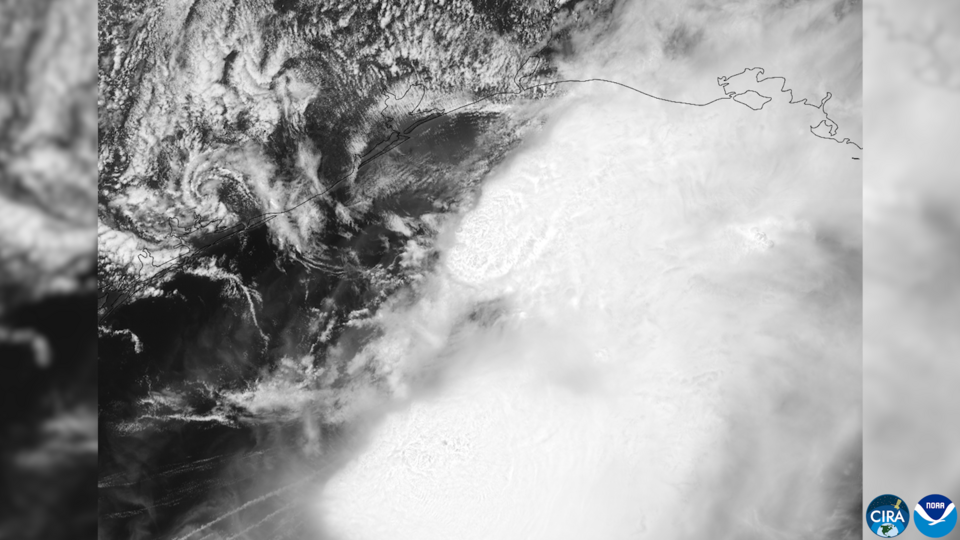
Image Description: Tropical Storm Arthur comes ashore on the Texas gulf coast, bringing heavy rainfall and tropical-force winds. Taken on 17 June 2026. GOES imagery: CSU/CIRA & NOAA
If you are behind on your mortgage or were recently denied a loan modification, a natural disaster can change your legal standing.
Living in a FEMA-declared disaster zone means federal housing regulators (including Fannie Mae, Freddie Mac, and the FHA) may require your mortgage company to offer immediate relief via a Disaster Forbearance Plan.
The Disaster Shield Rule: Because a natural disaster is classified as an entirely separate financial hardship, your past payment history is secondary.
Even if you owe thousands in back payments, are in active pre-foreclosure, or were recently rejected for an altered payment plan, you may be fully eligible for an emergency disaster forbearance.
A Disaster Forbearance may provide:
A freeze on foreclosure proceedings or legal filings.
The suspension of negative credit bureau reporting.
The elimination of all late fees.
An initial 3-to-6-month window where monthly payments are completely paused.
Note: If a borrower’s hardship is related to disaster but they were two or more months delinquent as of the date the disaster occurred, and the servicer determines the borrower can maintain their full monthly contractual payment, then the servicer must submit a request for a disaster payment deferral through Fannie Mae’s servicing solutions system for review and obtain prior approval from Fannie Mae.
The Step-by-Step Forbearance Action Plan
Step 1: Secure Your FEMA Proof: Log into your profile at DisasterAssistance.gov or locate your physical cover letter to confirm your active FEMA Application Number and Disaster Number 4927. Complete an application if you haven’t done so already.
Step 2: Contact Loss Mitigation: Call your mortgage servicer (e.g., Rocket Mortgage, Freedom Mortgage, Chase) and request to be transferred directly to the Loss Mitigation or Payment Assistance Department.
Step 3: State the Rules Verbatim: Use this script: "My primary residence was physically damaged during Tropical Storm Arthur, and I have an active FEMA file open; Disaster 4927, Application # [add yours here]). Because of this new natural disaster, I am formally requesting to be placed on a Disaster Forbearance Plan immediately."
Step 4: Bypass the Paperwork: Under FHA and Fannie Mae guidelines, servicers can grant an initial disaster forbearance over the phone without demanding a complex, text-heavy application packet (a Borrower Response Package). Request immediate verbal approval.
Step 5: Document the File: Upload your official FEMA Cover Letter directly into your mortgage company's online document portal to establish an unassailable paper trail.
Part 2: Critical Relief for Home-Based Small Businesses and Freelancers
When you operate a small business, an LLC, or a solo freelancing practice out of your primary residence, a storm hits your household and your income simultaneously. Federal disaster programming can bridge this gap with overlapping aid.
1. FEMA Self-Employment Tool Grants
Under updated Individual Assistance rules, FEMA provides direct, non-repayable grants to self-employed individuals to replace personal property vital to their livelihood. If you lost work computers, marketing technology, industry-specific software, specialized trade tools, or uniforms due to storm damage or power surges, FEMA can issue direct compensation. Upload a copy of your recent Schedule C or LLC registration documents to your portal to verify your status.
2. The SBA "Double-Dip" Capital Rule
The U.S. Small Business Administration (SBA) allows home-based businesses to apply for multiple categories of low-interest disaster funding concurrently:
Home Disaster Loans: Up to $200,000 to repair structural property damage like your roof or foundation.
Personal Property Loans: Up to $40,000 to repair or replace vehicles, furniture, and household appliances.
Economic Injury Disaster Loans (EIDL): Up to $2 million in working capital to pay ongoing operational costs (utilities, software subscriptions, contractor fees) that your business cannot handle due to the disaster's economic impact.
SBA Disaster Loan Repayment Terms (Fixed at 4.00%)
SBA disaster loans carry heavily subsidized terms, including a 12-month grace period with zero interest accrual and no payments due for the first full year. Loans are structured over ultra-long 30-year terms to keep monthly business overhead minimal.
3. Automatic IRS Tax Relief
Home-based businesses in the disaster zone automatically qualify for extended IRS administrative deadlines, postponing time-sensitive federal tax filing and payment windows. Additionally, business owners can consult IRS Publication 584-B to calculate and deduct disaster-related casualty losses on their federal tax returns, shielding their remaining income.
Part 3: FEMA Cash Rules & The Food Spoilage Paper Trail
For immediate emergency needs, FEMA utilizes the streamlined Serious Needs Assistance (SNA) program. This program provides an upfront, flat $750-770 cash grant per household to cover vital emergency supplies, groceries, water, fuel, infant formulas, and more.
While on-site FEMA physical property inspectors may occasionally state that FEMA doesn't "reimburse for spoiled food," the automated back-end system handles the $750 SNA grant independently from long-term home repair awards.
The Audit Rule: FEMA legally requires survivors to keep spending receipts for at least three years.
If you receive the $750 emergency cash but route it toward unapproved pre-disaster expenses—such as paying down your mortgage or a delinquent HOA or POA fee to prevent a home lien—you risk failing a federal audit. This can trigger a formal clawback of funds or cause FEMA to freeze your much larger structural repair grants.
The Solution: Spend $750 out of pocket on standard grocery and pantry purchases and other approved emergency needs over the months of June - August 2026 and save those receipts.
This establishes an audit-proof paper trail, legally freeing up your other household capital to satisfy pressing property liens, HOA/POA balances, etc. without risking your federal assistance profile.
Part 4: DCAP MEDIA-Curated Disaster Resource Directory
Bookmark this directory of applications, emergency tracking portals, and remote mental health networks to manage your recovery as smoothly as possible:
1. Federal & Financial Assistance Portals
FEMA Individual Assistance: Submit documentation, track your inspection notes, and view your payout status. Online: DisasterAssistance.gov. Helpline: 1-800-621-3362 (7:00 AM – 11:00 PM local time).
SBA Disaster Loan Portal: File for physical business damage, home damage, or economic injury capital. Online: sba.gov/disaster. Support Line: 1-800-659-2955.
2. Immediate Local Support & Emergency Aid
Louisiana 211 Statewide Network: Connect directly with regional community operations for local food distribution appointments, tarp supplies, and utility clearing programs. Dial: 211 (or text your ZIP code to 898-211). Online: louisiana211.org.
The American Red Cross (Louisiana Chapter): Access emergency community shelters, hot meals, and immediate on-the-ground recovery supplies. Get Help Line: 1-800-RED-CROSS (1-800-733-2767). Online: redcross.org/get-help.
Greater New Orleans-area residents: Access the free New Orleans Community Resource Guide produced by nonprofit Imagine Water Works. The guide has been compiled with the intention of increasing public access to services that are free or low-cost in the New Orleans area.
3. Free, Remote Crisis Counseling and Mental Health Resources
The mental toll of navigating structural damage, business disruptions, and financial insecurity is a valid burden.
If you or your loved ones are experiencing sleep loss or emotional distress, reach out to these completely free, confidential, 24/7 remote care networks:
SAMHSA Disaster Distress Helpline: A dedicated, national hotline staffed by professional counselors specifically trained to support individuals navigating the emotional aftermath of natural disasters. Call or Text: 1-800-985-5990. Spanish Access: Call and press "2". Deaf/Hard of Hearing: Dial 7-1-1 or use your preferred relay provider.
Louisiana Spirit Crisis Counseling Program: Louisiana's localized network providing crisis intervention, emotional coping strategies, and stress-management techniques via remote phone appointments. How to Access: Dial 211 and explicitly request to be connected to a "Louisiana Spirit Counselor."
The 988 Suicide & Crisis Lifeline: For immediate, severe emotional distress, acute anxiety, or mental health emergencies. Call or Text: 988
A Note of Solidarity for the Louisiana Community from DCAP MEDIA’s Daniela “Dani” Capistrano
To every homeowner patching a damaged roof, every freelancer staring down a frozen client pipeline, and every small business owner working around the clock to keep their operations alive—you are not in this alone.
Rebuilding a life, a household, and a livelihood takes immense courage, but Louisiana communities are built on grit, hope, and resilience.
Neighbors help neighbors, and the structural protections outlined above are your legal rights as a survivor.
Gather your application numbers, take your recovery one step at a time, and utilize these resources to protect your home and peace of mind.
You’ve got this.
Love and Solidarity,
Daniela “Dani” Capistrano
Owner & Founder, DCAP MEDIA LLC
Owner & Founder, Northshore Vanguard*
*Northshore Vanguard launches August 2026: Progressive Gulf South News & Culture meets economic justice and advocacy; centering underrepresented voices in St. Tammany Parish and beyond.
Subscribe below to the DCAP MEDIA newsletter and find out how to collaborate with Northshore Vanguard as a contributor, subscriber, sponsor, community partner, and advertiser. Submit tips via this contact form until August 2026 (northshorevanguard.com website coming soon!).